MeowFactory Campaign Modes Guide
Campaign chapters, free mode, survival, and how the demo prepares you for November 2026.
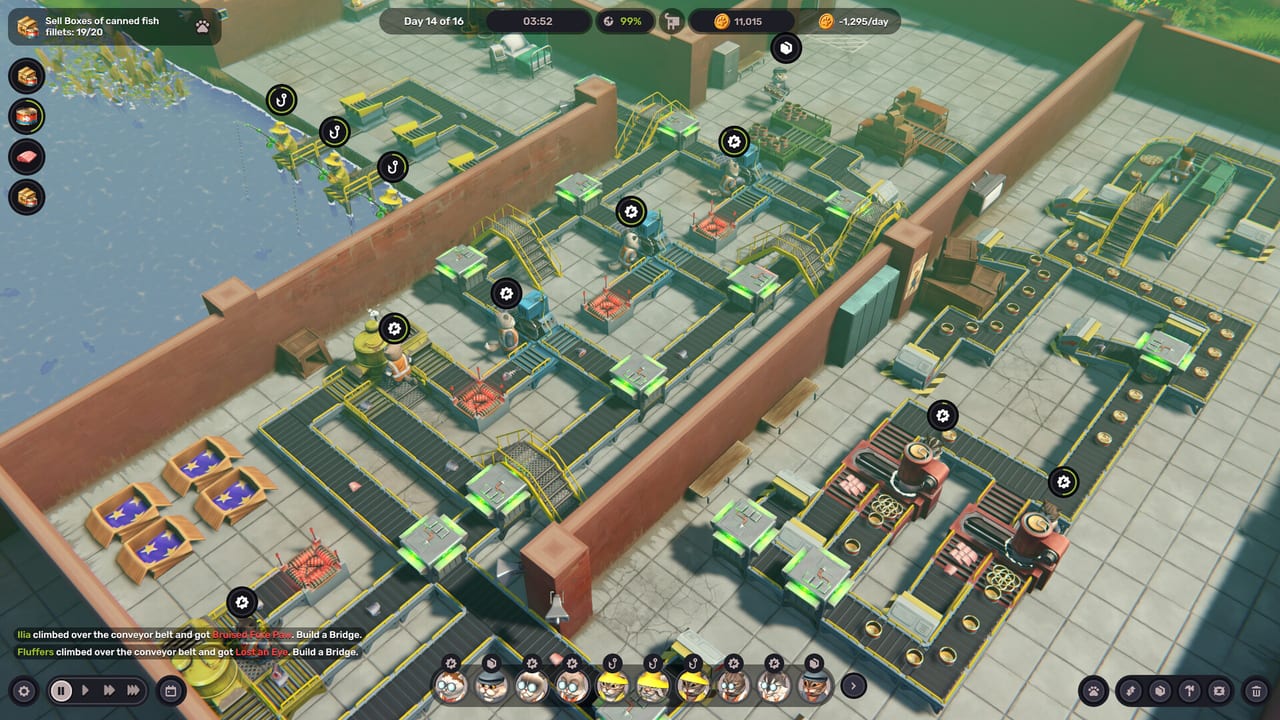
MeowFactory is not one endless sandbox with a thin story wrapper. Smola Game Studio (with Gamirror Games) ships a single-player factory puzzle game whose full Steam build is framed around roughly 18 campaign levels across 5 chapters, then opens into free mode and survival. This guide explains how those modes fit together, how the free Steam demo maps onto Chapter 1, and how to prep for the November 27, 2026 launch without inventing fake unlocks or prices.
Platforms are Windows and macOS on Steam (full app 4088520, demo 4731370). There is no shared multiplayer — every jammed belt and every sleepy meoworker is yours. Confirm hardware on the system requirements page, then pair this overview with Demo Walkthrough, Automation Basics, and Meoworker Care.
Mode map at a glance
| Mode | Role | What you practice |
|---|---|---|
| Campaign (~18 levels / 5 chapters) | Structured puzzles with rising constraints | Reading tickets, compact layouts, new machines under pressure |
| Free mode | Open factory play after (or beside) campaign framing | Longer chains, vanity layouts, experimentation |
| Survival | Longer-arc pressure on care and throughput | Mood, cleanliness, pay discipline over time |
| Demo (tutorial + Chapter 1 slice) | Onboarding before launch | Grammar of belts, cats, and orders |
Exact level counts and unlock gates can shift slightly as Smola patches; treat “about eighteen across five chapters” as the public shape, and re-check the Updates Hub if a changelog revises the table of contents.
Campaign: five chapters of puzzle factories
Campaign is the spine. Each level is a compact room (or tightly bounded floor) with a win condition: ship enough of the right SKUs before chaos wins. Space is rationed on purpose. You place production machines, wire conveyors, assign meoworkers, and keep mood, cleanliness, and pay from collapsing the run.
Think of chapters as difficulty and teaching arcs rather than open-world districts:
- Chapter 1 — language of the game: short belts, first splitters, basic care, order literacy. This is what the demo exposes.
- Chapters 2–3 — expect longer chains, tighter footprints, and more ways for cats to interfere with product.
- Chapters 4–5 — denser puzzles that punish spaghetti and neglect; the same grammar, harder sentences.
You do not need spoilers for every later machine to prepare. You need habits: mirrored facings, intentional buffers, sleep furniture before ego layouts, and pause-first incident response. Those habits are documented on Automation Basics and Meoworker Care.
How to approach any campaign level
- Read the order ticket before placing a single tile.
- Place mandatory machines with mirroring in mind.
- Draw the shortest spine belt from source to sink.
- Add storage where rates disagree.
- Seat cats and confirm professions (profession memory helps after emergencies — still verify).
- Place care props before you crank simulation speed.
- Run slow, fix riders and jams, then accelerate.
- Close unused splitter outputs when one meter races ahead.
If a level introduces bridges or smarter routing tools, integrate them the same session. “Saving toys for later” while cats board the main line is how Chapter 1 already teaches failure — later chapters only raise the stakes.
Free mode: the sandbox sentence
Free mode is where campaign grammar becomes a longer essay. Expect fewer artificial walls and more room to experiment with production graphs, decorative layouts, and “what if I mirror three packers onto one spine?” ideas. It is still single-player; it is still MeowFactory — hungry cats will still treat belts like furniture if you leave scenic loops everywhere.
Use free mode to:
- Stress-test layouts you barely cleared in campaign.
- Practice splitter discipline without a ticking chapter meter.
- Learn how care props scale when shifts run longer.
- Prototype ideas you might later judge on the Tier List Hub once community rankings settle.
Do not treat free mode as “automation optional.” Paw labour remains the expensive verb. The difference is pacing: you can rebuild without failing a chapter gate, which makes it the best place to rehearse rotation, mirroring, and job memory after the August 2026 demo-direction updates.
Survival: care under a longer clock
Survival leans on the soft systems. Throughput still matters, but neglect compounds. Mood drops, cleanliness slides, pay lag, and suddenly your beautiful line is a wrestling ring with a fire hazard. If campaign teaches you to ship fish boxes, survival teaches you to keep the crew functional while you ship them.
Prep habits that transfer:
- Budget tiles for sleep and cleanliness early, not after the first meltdown.
- Keep belts short so snack and ride incidents stay rare.
- Re-check profession assignments after any emergency, even with job memory.
- Prefer stable average throughput over bursty overproduction that fills the floor with toy piles.
Deep care tactics live on Meoworker Care. Survival does not invent a second game; it refuses to let you ignore half of the first one.
How the demo maps to Chapter 1
The Steam demo (app 4731370) is deliberately a revamped tutorial plus Chapter 1 campaign levels — publicly described as about four playable campaign stages around that opening chapter, depending on how a given build labels tutorial versus level select. Quality-of-life already points at full-release direction: conveyor rotation, machine mirroring, profession / job memory, and a clearer cat panel. An August 2026 demo update wave emphasized those tools alongside chapter framing polish.
What the demo withholds on purpose: the hardest later puzzles, most production-chain depth, and the full free/survival toy box. Clearing the demo is grammar class. Launch week is the novel.
Transfer checklist from demo → full campaign
- You can finish tutorial sales without carrying every item by paw.
- You can clear Chapter 1 style orders with at least one intentional buffer.
- You can recover from a mood or cleanliness scare without abandoning the save.
- Rotate, mirror, and splitter controls are muscle memory.
- You can explain each belt’s job in one sentence.
Work the full playbook on Demo Walkthrough. Then return here when you decide which full-release mode to open first after the credits of chapter arcs.
Prep for launch week (November 27, 2026)
- Wishlist and verify install path for app 4088520; keep the demo warm so controls stay familiar.
- Re-read Getting Started if you have been away for weeks.
- Skim the Updates Hub and Release Date the day before unlock for last-minute patch notes.
- Confirm Windows or macOS specs on system requirements.
- Bookmark practical habits on Tips and Tricks so launch-night adrenaline does not rebuild every belt twice.
- Join official community channels listed on the Links Hub (Discord
https://discord.gg/VgEhHNXEv7, Telegram, YouTube) for hotfix chatter — not for invented promo codes. - Expect Steam features such as Achievements, Cloud saves, Leaderboards, and Family Sharing on the store page; use them as quality-of-life, not as substitutes for learning the factory.
Launch week tip: clear or replay the demo Chapter 1 slice once the evening before. Muscle memory beats a cold tutorial at midnight unlock.
Choosing what to play first after launch
| If you want… | Open first | Then |
|---|---|---|
| Structured teaching | Campaign Chapter 1→ | Free mode experiments |
| Creative layouts | Free mode | Survival stress test |
| Soft-system mastery | Survival (when comfortable) | Revisit tight campaign levels |
| Ranking talk | Clear a few campaign puzzles cleanly | Compare notes on Tier List Hub |
There is no multiplayer queue to fill. Pace yourself. The factory is patient; the cats are not.
Related reading
- Guides Hub — full how-to index.
- Getting Started — install and first-hour loop.
- Automation Basics — belts, splitters, mirrors, bridges.
- Meoworker Care — mood, cleanliness, pay, disasters.
- Demo Walkthrough — tutorial and Chapter 1 in detail.
- Tips and Tricks — launch-week habits and micro optimizations.
- Tier List Hub — machine and layout rankings as meta appears.
- Machines Priority — what to build when space is cruel.
- Updates Hub — patch and schedule news.
- Tools Hub — helpers and checklists.
- System requirements — Windows/macOS specs.
- Links Hub — Steam, Discord, Telegram, socials.
Campaign teaches the rules, free mode lets you rewrite the paragraph, survival grades your care homework. Learn Chapter 1 in the demo, then pick the mode that matches the night you have — not the fantasy of doing all three perfectly on unlock day.
Frequently Asked Questions
Quick answers to the most common MeowFactory questions.
How many campaign levels does MeowFactory have?
The full game is publicly framed as about 18 campaign puzzle levels across 5 chapters, plus free mode and survival. Exact labeling can shift with patches — check the Updates Hub if Smola revises the structure.
What part of the campaign is in the demo?
The Steam demo includes a revamped tutorial and Chapter 1 campaign content (about four campaign stages in public descriptions). Later chapters and the full free/survival suite wait for the complete release.
Is free mode or survival available in the demo?
Treat the demo as onboarding for tutorial and Chapter 1. Full free mode and survival are part of the complete game’s mode set, not something this wiki invents inside the demo build.
Does MeowFactory have shared campaign?
No. MeowFactory is single-player only. There is no shared factory or shared campaign mode.
When should I play survival versus campaign?
Learn belts and care in campaign (and the demo) first. Open survival when you can keep mood, cleanliness, and pay stable without constant panic pauses — it rewards discipline over longer arcs.